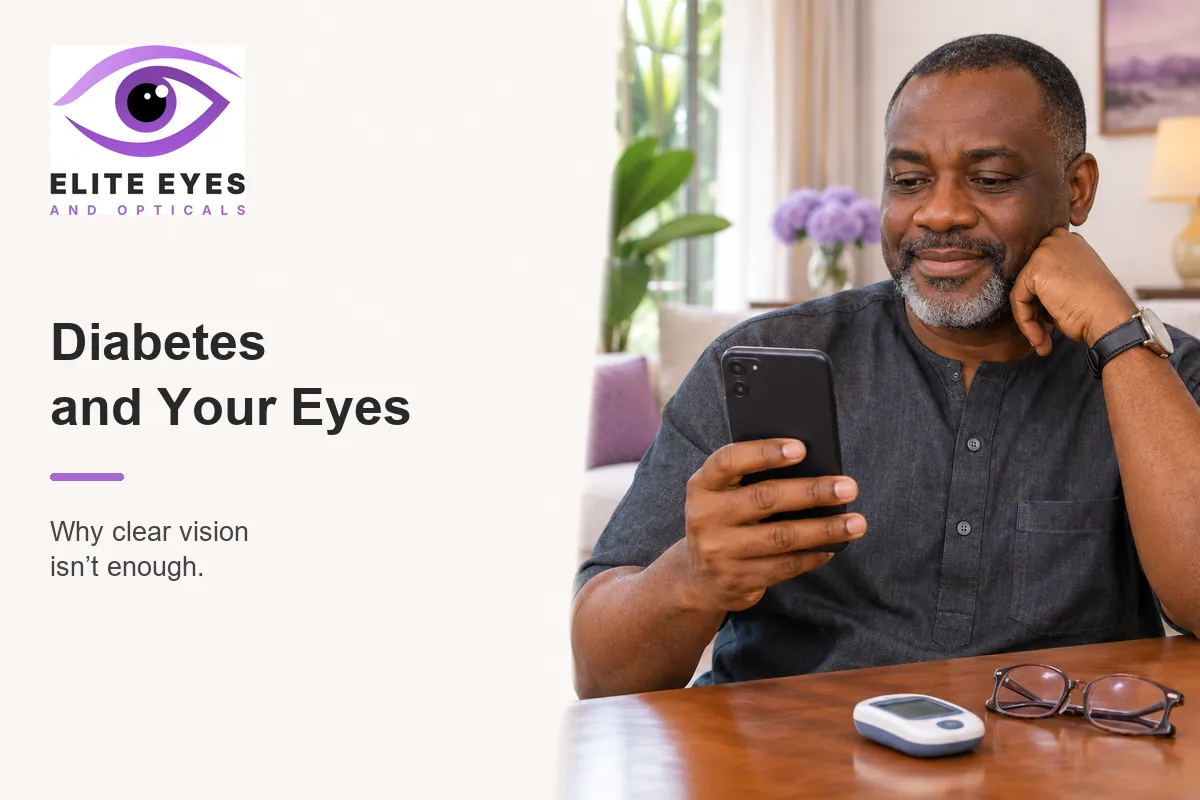
You can read your phone and recognize faces, yet diabetes may still be affecting your eyes. Discover why clear sight is not enough and when to get checked.
Picture a trader at Balogun Market. He reads transfer alerts, counts his money and recognizes customers across the road.
“Why should I check my eyes? I can see very well”, he would say.
It sounds reasonable. But if he has diabetes, clear sight does not tell the whole story.
How does diabetes affect your eyes?
Over time, high blood sugar can damage the tiny blood vessels at the back of your eyes. They may leak or bleed and harm the part that helps you see.
This damage can begin without pain or blurred vision. You may still read your phone comfortably while changes develop inside your eyes.
Can an eye test find problems before you notice them?
Yes. An eye examination can detect changes that you cannot see or feel yourself.
Reading letters on a chart is only part of the check. Your eye-care professional may use drops to widen the small opening at the center of each eye, allowing a better look inside.
The drops can make your vision temporarily blurry and sunlight uncomfortable. You may need to arrange for someone else to drive you home.
How often should you have your eyes checked?
For adults with type 2 diabetes, the first check should happen when diabetes is diagnosed. With type 1 diabetes, it should usually happen within five years of diagnosis.
After that, many people need yearly checks. Your eye doctor may recommend a shorter or longer gap, depending on your results and diabetes control. Follow that plan rather than waiting for your sight to change.
Which changes should you act on immediately?
Get urgent eye care today if you notice:
Sudden loss of sight or a sudden major change in your vision.
Many new dark spots or lines moving across your view.
Flashes of light.
A dark shadow spreading across your vision, like a curtain.
For blur that comes and goes or difficulty reading, arrange an examination promptly too. Do not simply assume you need stronger glasses.
What can you do to protect your sight?
Keep taking your diabetes medicines as prescribed. Work with your healthcare team to manage your blood sugar, blood pressure and cholesterol.
Stay physically active, follow your agreed eating plan and avoid smoking. These steps can reduce the risk of eye damage, but they do not replace eye examinations.
Finding a problem early gives you the chance to receive treatment before more sight is lost. Diabetes does not mean blindness is inevitable.
When you book your next diabetes review, check when your eyes were last examined too.
At Elite Eyes and Opticals, Lekki, we can assess your eyes and advise on the next steps. Call or WhatsApp 0901 969 2075 to book.